
 October 19, 2026
From Complex Retrofits to Confident Results


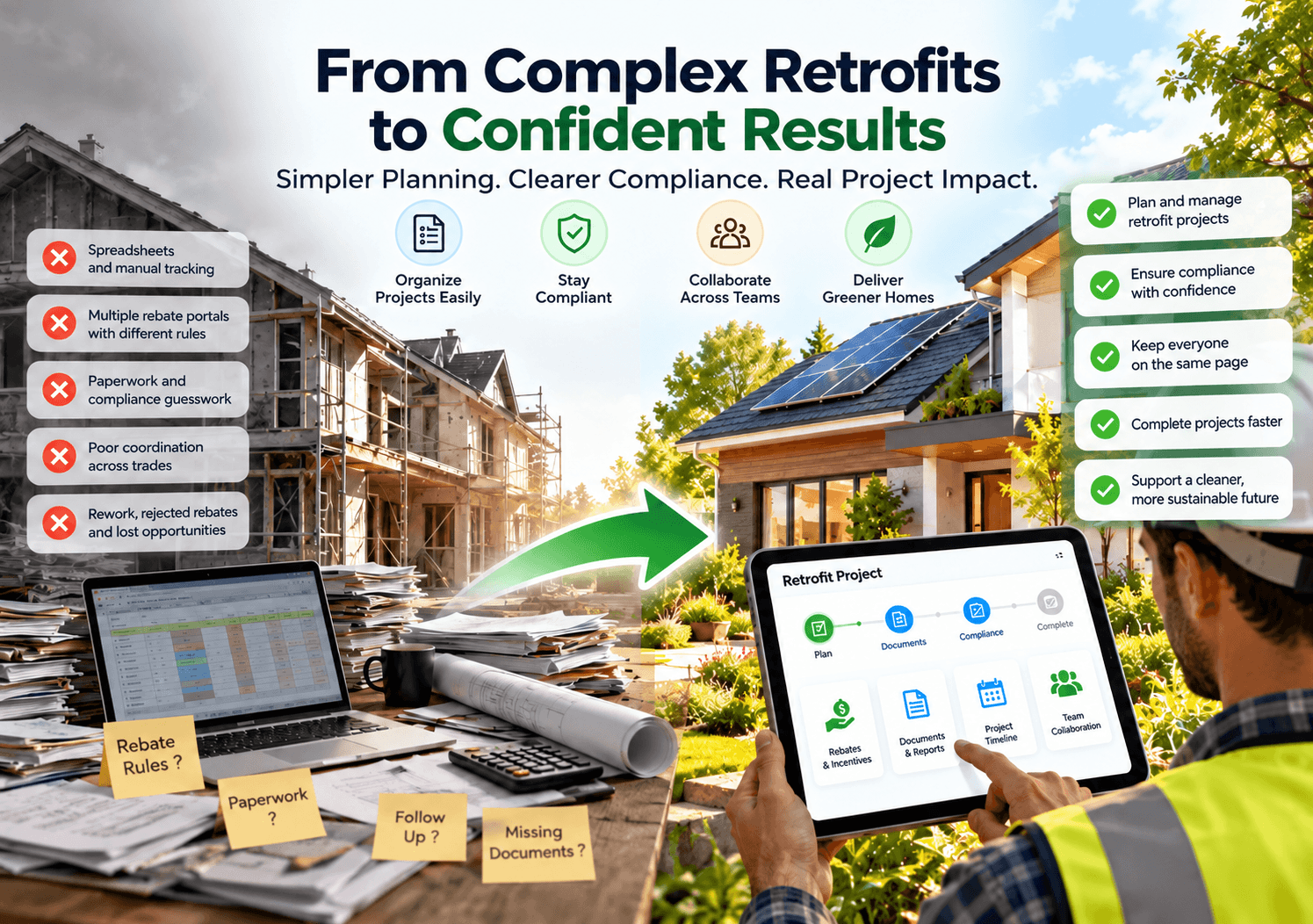
Home energy retrofits play an important role in improving energy efficiency, reducing energy consumption, and creating more sustainable homes. However, planning and delivering retrofit projects can be complicated. Contractors, homeowners, advisors, and other stakeholders often need to navigate multiple rebate programs, documentation requirements, compliance rules, and project timelines. When these processes rely on spreadsheets, emails, disconnected software, and manual paperwork, important information can become difficult to manage. Missing documents, inconsistent requirements, and communication gaps can result in rework, delayed projects, and rejected rebate applications.
EcoHatch is designed to simplify how retrofit projects are planned, documented, and delivered. Guided by clarity, compliance, and practical project execution, the platform aims to help make retrofit workflows more organised, transparent, and manageable.
Why Home Retrofit Projects Need Better Management
A home retrofit project can involve several activities, including initial assessments, planning, selecting improvements, coordinating contractors, collecting documents, and managing rebate requirements. Each stage requires accurate information and effective communication.
When these activities are managed through disconnected tools, project participants may struggle to maintain a consistent understanding of requirements and progress. Teams may spend valuable time searching for documents, confirming information, or correcting avoidable mistakes.
Effective home retrofit project management helps bring these activities into a more structured workflow. By improving how information is organised and shared, project teams can reduce administrative complexity and focus more attention on completing the work.
EcoHatch addresses this challenge by focusing on practical workflows that simplify the process of planning, documenting, and delivering retrofit projects.
Clarity Over Complexity: Simplifying Retrofit Workflows
Retrofit projects often involve detailed requirements that can be difficult for homeowners and contractors to interpret. Rebate rules, project documentation, and procedural steps may vary depending on the program and the work being completed.
When information is unclear, project participants may misunderstand requirements or overlook important steps. This can lead to unnecessary follow-ups, delays, and additional administrative work.
EcoHatch follows a clarity-first approach, aiming to turn complex retrofit processes into clear, actionable steps. Organised workflows can help users understand what information is needed, which tasks require attention, and how project activities fit together.
Clearer processes can also improve communication between homeowners, contractors, and advisors. When participants have a better understanding of the project requirements, they can coordinate their responsibilities more effectively.
By prioritising simplicity and transparency, EcoHatch aims to make retrofit project management easier to understand and navigate.
Compliance by Design: Reducing Errors and Rework
Compliance is an important part of many home retrofit and rebate programs. Project participants may need to meet specific eligibility conditions, follow prescribed procedures, and provide supporting documentation before an application can be approved.
Managing these requirements manually can introduce uncertainty. Missing information, incomplete paperwork, or misunderstandings about program rules may result in corrections, additional requests, or rejected applications.
A compliance-focused workflow helps make requirements more visible throughout the project. Organised documentation, clearly defined steps, and consistent processes can support more accurate project administration.
EcoHatch places compliance-first thinking at the centre of its approach. By considering compliance during the design of its workflows, the platform aims to help reduce avoidable errors and improve confidence among contractors and homeowners.
Program requirements can change, so users should always confirm the latest rules with the relevant rebate administrator. Digital workflows can support compliance management, but they do not independently guarantee eligibility or approval.
Replacing Spreadsheets and Disconnected Tools
Spreadsheets and email remain useful tools for many business activities, but they can become difficult to manage when a retrofit project involves multiple people, documents, deadlines, and requirements.
Information may be spread across email conversations, separate files, shared folders, and different software systems. Team members may work from outdated documents or have difficulty identifying the latest project status.
A more connected retrofit workflow can help reduce these challenges by providing a structured way to organise project information and activities. Centralised information can make it easier for participants to understand their responsibilities, review relevant documents, and follow project progress.
For growing retrofit businesses, reducing dependence on fragmented administrative processes can also help create more consistent ways of working across projects.
EcoHatch is built around the need to simplify these workflows and make retrofit project administration more practical for the people doing the work.
Managing Rebate Requirements with Greater Confidence
Rebates and incentive programs can help make energy-efficiency improvements more accessible to homeowners. However, navigating program requirements can be challenging when different initiatives use different eligibility criteria, application procedures, and documentation standards.
Contractors and advisors may need to confirm which requirements apply, collect supporting records, and ensure that project documentation is complete. When these activities are not organised effectively, important details can be overlooked.
Structured rebate management workflows can help teams keep track of the information and documentation associated with a project. Clearer processes can also make it easier to identify missing items before an application is submitted.
EcoHatch aims to simplify how rebate requirements and retrofit processes are managed, helping users approach project documentation with greater clarity.
The specific requirements for each incentive program should always be verified with the appropriate program administrator. A well-organised workflow can support preparation, but rebate approval remains subject to the applicable rules and review process.
Improving Coordination Across Contractors and Advisors
Successful retrofit projects often depend on coordination among several participants. Homeowners, contractors, energy advisors, and other professionals may each be responsible for different activities, documents, or decisions.
Without a clear process for sharing information, communication gaps can develop. Participants may not know whether a task has been completed, which documents are outstanding, or what needs to happen next.
Better project coordination begins with clear responsibilities, accessible information, and a shared understanding of the project workflow. When participants can follow progress and identify outstanding tasks, they can work together more effectively.
EcoHatch is designed around the practical realities of retrofit work, including on-site activities, tight timelines, and the needs of growing businesses. Its focus on clear and usable workflows supports a more coordinated approach to project execution.
Improved coordination can help reduce unnecessary follow-ups and administrative friction, allowing project teams to concentrate on delivering quality retrofit work.
Built for Real Work, Not Just Administration
Retrofit professionals operate in environments where time, resources, and schedules matter. Tools that add unnecessary complexity can make their work harder instead of easier.
A useful retrofit management platform should reflect how projects are actually delivered. It should support practical activities, help users organise information, and make important requirements easier to understand.
EcoHatch emphasises tools that address real operational challenges rather than theoretical problems. This practical approach recognises that contractors and advisors need workflows that fit their daily responsibilities.
By prioritising usability, clarity, and practical execution, EcoHatch aims to support more efficient project administration while keeping the realities of retrofit delivery in focus.
How Better Retrofit Processes Support Sustainable Homes
Home retrofits can contribute to energy efficiency, improved building performance, and broader sustainability goals. Depending on the improvements selected, projects may involve insulation upgrades, heating and cooling improvements, air sealing, or other energy-related measures.
However, delivering these improvements effectively requires more than choosing the right products or technologies. Projects also need suitable planning, reliable documentation, coordination, and attention to applicable program requirements.
When administrative processes become unnecessarily complicated, teams may spend more time resolving paperwork and communication issues. Streamlined workflows can help reduce these obstacles and support a more organised project experience.
EcoHatch focuses on improving the processes behind retrofit delivery. By helping simplify planning, documentation, and compliance workflows, the platform aims to support the people working to make homes more energy efficient.
The Future of Home Retrofit Project Management
As demand for energy-efficient homes grows, the retrofit ecosystem needs practical ways to manage increasing project complexity. Contractors and advisors need processes that can accommodate different requirements without creating unnecessary administrative burdens.
Digital workflow platforms offer an opportunity to organise information, improve visibility, and make project responsibilities clearer. Compliance-focused processes can help teams pay closer attention to required documentation, while better coordination can reduce communication gaps among project participants.
The goal is not simply to replace paper with digital tools. It is to make the overall process easier to understand, manage, and execute.
EcoHatch's approach is guided by three core values: clarity over complexity, compliance by design, and tools built for real work. Together, these principles reflect a practical vision for improving how retrofit projects are planned and delivered.
Conclusion
Home retrofit projects are essential to creating more energy-efficient and sustainable homes, but fragmented processes can make them unnecessarily difficult to manage. Disconnected software, complicated rebate requirements, manual paperwork, and poor coordination can lead to delays, rework, and missed opportunities.
EcoHatch aims to address these challenges by simplifying retrofit workflows, supporting compliance-focused project administration, and prioritising the practical needs of contractors, homeowners, and advisors.
By bringing greater clarity to planning and documentation, encouraging more consistent processes, and supporting coordination across project participants, EcoHatch helps make retrofit project management more manageable.
A better retrofit process begins with clear information, practical tools, and well-organised execution. With these principles at its core, EcoHatch is working towards a more streamlined retrofit ecosystem that supports better project experiences and a more sustainable future.
Ready to Unlock Canada’s Retrofit Opportunity?
Turn rebates into revenue. Deliver compliant retrofits with confidence.
