
 October 29, 2026
Make Energy-Efficient Retrofits Simple, Scalable, and Profitable


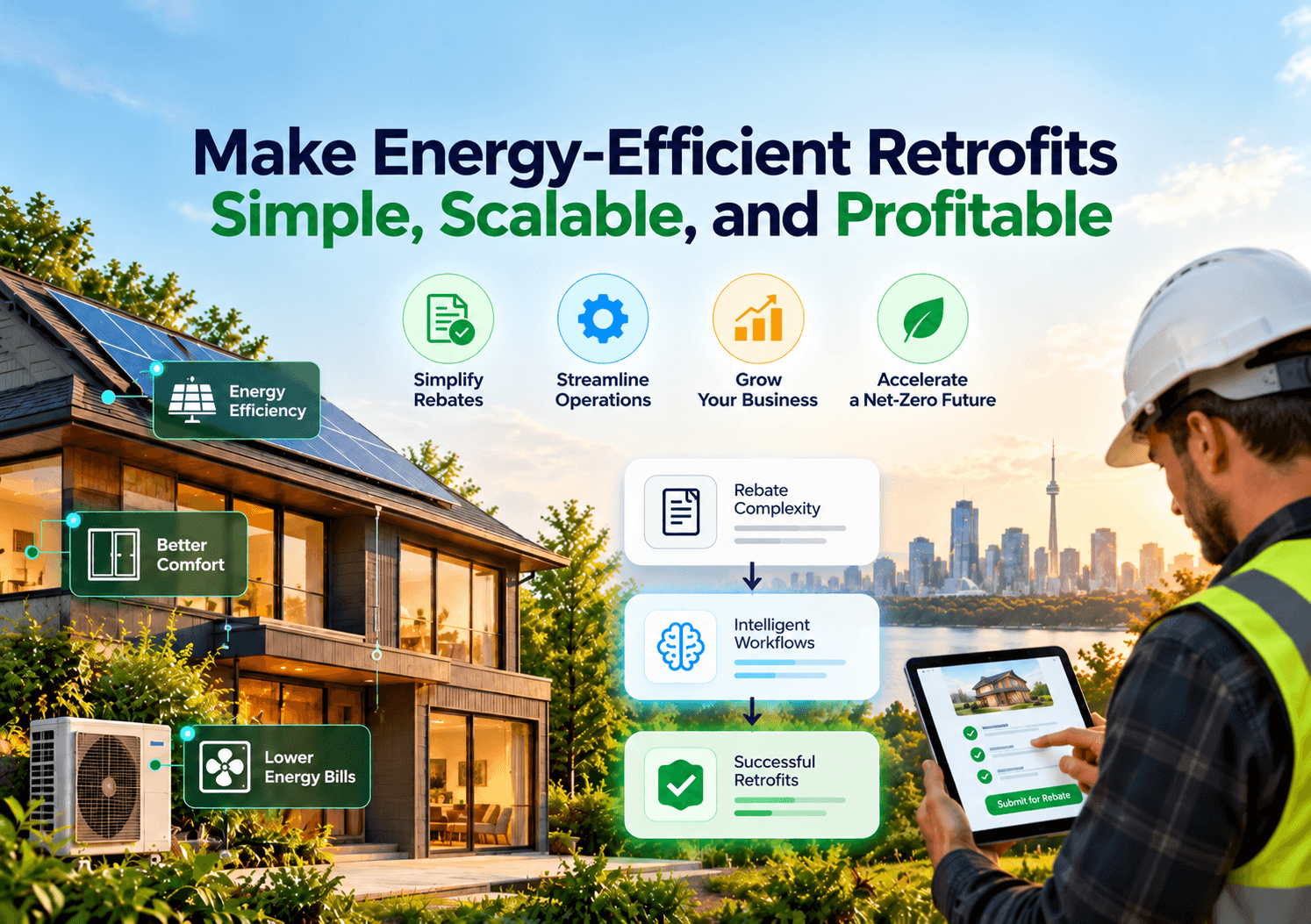
Energy-efficient home retrofits are becoming increasingly important as Canada works toward more sustainable buildings and lower energy consumption. Upgrading insulation, heating and cooling systems, windows, and other building components can improve energy performance, enhance indoor comfort, and help reduce energy costs.
However, delivering retrofit projects at scale involves more than completing the physical upgrades. Service providers must also navigate complex rebate programs, eligibility requirements, documentation, project coordination, and incentive submissions. Without efficient processes, this administrative work can slow projects down and make business growth more difficult.
By turning complex rebate requirements into structured, technology-driven workflows, the retrofit industry can make energy-efficient upgrades easier to deliver, manage, and scale.
Why Energy-Efficient Retrofits Matter
Residential buildings consume energy for heating, cooling, lighting, and everyday activities. When buildings are inefficient, they may require more energy to maintain comfortable indoor temperatures, increasing operating costs and environmental impact.
Energy-efficient retrofits help address these challenges through improvements such as better insulation, high-performance windows, air sealing, and efficient heating and cooling equipment. The most appropriate upgrades depend on the building's condition, climate, energy assessment, and the homeowner's priorities.
For homeowners, these improvements can support greater comfort and potentially lower energy consumption. For service providers, growing demand for building efficiency creates opportunities to deliver valuable projects and develop long-term customer relationships.
The Challenge of Managing Retrofit Rebate Programs
Government and utility incentive programs can help make eligible energy upgrades more affordable. However, each program may have its own eligibility rules, application requirements, documentation standards, deadlines, and submission procedures.
Service providers often need to coordinate information across homeowners, contractors, energy advisors, program administrators, and other project participants. Managing these requirements manually can introduce delays, create repetitive administrative work, and increase the risk of missing important information.
When a business handles multiple projects simultaneously, these challenges become even more significant. Without standardized processes, it can be difficult to maintain consistent documentation, monitor project progress, and ensure that each application follows the relevant program requirements.
Turning Rebate Complexity into Intelligent Workflows
Technology-driven workflows can help organize the different stages of a retrofit project. By centralizing project information and structuring routine administrative tasks, service providers can improve visibility into what needs to be completed and which steps require attention.
Digital workflows can support document collection, project tracking, eligibility checks, task coordination, and rebate application preparation, depending on the platform's capabilities and the requirements of each program.
A more organized process can help reduce repetitive work and make it easier to identify missing information before a submission is made. It can also improve communication among the people involved in delivering a retrofit project.
The objective is to make rebate administration more manageable while allowing service providers to focus on project quality and customer service.
Helping Service Providers Scale Their Businesses
Growth in the retrofit industry requires businesses to manage more projects without allowing administrative complexity to increase at the same rate. Manual processes that work for a small number of projects can become difficult to maintain as demand grows.
Standardized workflows can help service providers organize project information, establish repeatable procedures, and improve coordination across teams. Better visibility into project status can also support workload planning and help businesses identify delays earlier.
When operational processes become more consistent, companies can devote more time to customer relationships, installation quality, staff development, and business expansion.
Scalability is not simply about handling more projects. It is about building processes that support consistent service delivery as project volume increases.
Capturing Available Incentives and Improving Project Value
Rebates and incentives can influence a homeowner's decision to proceed with an energy-efficient upgrade. Helping customers understand relevant program requirements and preparing complete documentation can make the administrative side of a project easier to manage.
Service providers need clear processes for identifying applicable programs, tracking documentation, and monitoring submission requirements. Organized records can help reduce avoidable errors and support more reliable application management.
However, incentive availability, eligibility, and payment amounts vary by program and project. Service providers should verify current requirements and avoid promising rebate approval or a specific incentive amount before eligibility has been confirmed.
A structured approach can help businesses manage these details more effectively while providing customers with clearer information throughout the retrofit journey.
Supporting Higher-Quality Retrofit Projects
Administrative efficiency should complement, not replace, technical quality. Successful retrofit projects require appropriate assessments, suitable equipment selection, qualified installation, and attention to applicable building standards and program requirements.
When project information and documentation are organized, service providers can coordinate tasks more clearly and maintain better records. This can help create a smoother process from initial assessment through installation and incentive submission.
A consistent workflow also helps teams understand responsibilities, follow established procedures, and communicate project progress to customers.
Advancing Canada's Path to Net-Zero
Improving building energy efficiency is an important part of reducing energy demand and supporting Canada's broader climate objectives. Energy-efficient retrofits can contribute to this effort by improving building performance and reducing energy consumption, although the impact depends on the upgrades selected, the building, and how the systems are used.
Making retrofit projects easier to coordinate and administer can help service providers deliver improvements more efficiently. When operational barriers are reduced, businesses may be better positioned to serve more customers and support wider adoption of eligible energy-efficiency upgrades.
Technology can play an important role by connecting project information, simplifying administrative processes, and helping businesses manage the complexity associated with incentive programs.
Conclusion
Energy-efficient retrofits offer opportunities to improve building performance, enhance comfort, and support more sustainable energy use. Yet complex rebate administration and fragmented operational processes can make it challenging for service providers to deliver projects consistently and expand their businesses.
By transforming rebate complexity into intelligent workflows, service providers can improve coordination, organize documentation, manage project requirements, and build more scalable operations. These improvements can help create a better experience for customers while supporting higher-quality project delivery.
EcoHatch focuses on reducing operational friction in the retrofit process, helping service providers manage rebate workflows, capture eligible incentive value, and grow their businesses. By making retrofit delivery simpler and more scalable, technology can help support Canada's transition toward more energy-efficient buildings and a net-zero future.
Ready to Unlock Canada’s Retrofit Opportunity?
Turn rebates into revenue. Deliver compliant retrofits with confidence.
