
 September 09, 2026
The Hidden Work Behind Every Successful Home Retrofit


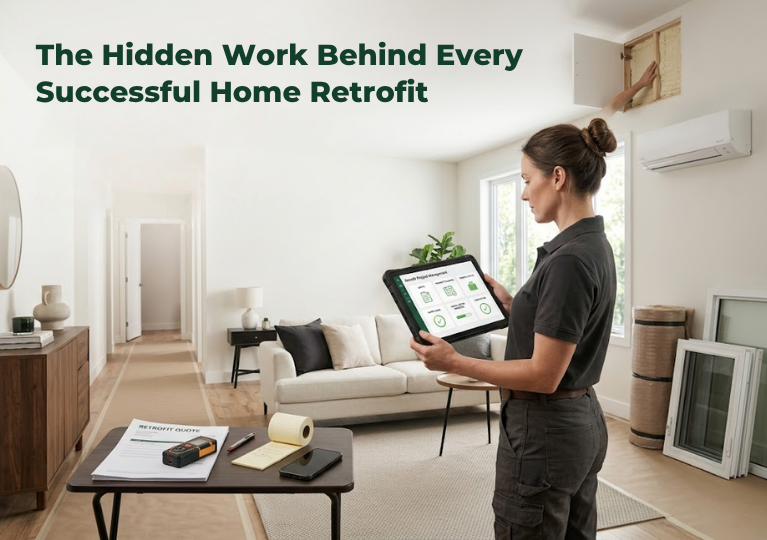
A successful home retrofit may look simple from the homeowner’s perspective: identify the right upgrades, complete the installation, and start enjoying a more energy-efficient home. Behind that result, however, contractors manage a much more complex process.
Property information, project estimates, rebate requirements, compliance documentation, homeowner communication, scheduling, installation records, and final verification all need to come together. The quality of this hidden work can have a major impact on how efficiently a retrofit project is delivered.
The Retrofit Starts Before Installation
The visible work begins when contractors arrive at the property, but the actual project starts much earlier.
Before installation, contractors need to understand the home, identify suitable improvements, estimate project costs, and determine which upgrades can provide meaningful energy-efficiency benefits. Accurate preparation helps create a stronger foundation for the work that follows.
A well-organized pre-project process can also reduce surprises during installation and make it easier to communicate expectations with homeowners.
Turning Property Information Into a Project
Every home has different characteristics. Building age, existing equipment, insulation, windows, heating systems, and other factors can influence which retrofit measures make sense.
Contractors need to turn this information into practical project recommendations. Technology can help organize property data and support more consistent planning, allowing teams to spend less time gathering scattered information and more time evaluating the project itself.
The Quote Is More Than a Price
For homeowners, a retrofit quote is often the first detailed look at the proposed project. It needs to communicate more than a final number.
A strong proposal can explain the recommended upgrades, materials, estimated costs, timelines, and potential incentives. When these details are organized clearly, homeowners can better understand the value of the work and make more informed decisions.
For contractors, structured proposals can also create consistency across projects and reduce repetitive administrative tasks.
Rebates Add Another Layer of Complexity
Energy-efficiency rebates can make retrofit projects more attractive to homeowners, but managing incentive programs can create additional work for contractors.
Eligibility requirements, documentation, program rules, deadlines, and submission processes all need attention. Keeping rebate information connected to the project can help reduce administrative friction and make it easier to track what has been completed and what still needs attention.
Automation can make this process more efficient by helping contractors identify relevant programs and organize rebate-related documentation.
Compliance Cannot Be an Afterthought
A retrofit project may need to satisfy specific program, regional, or verification requirements. Missing information or incomplete documentation can create unnecessary delays.
Building compliance into the workflow from the beginning can help contractors collect the right information as the project progresses. Instead of trying to reconstruct records at the end, teams can maintain documentation throughout the project lifecycle.
This creates a more organized process for both contractors and the stakeholders involved in verification.
Documentation Is Part of the Job
Photos, invoices, project details, equipment information, inspection records, and other documents can become important parts of a completed retrofit project.
Managing these records through disconnected folders, emails, and spreadsheets can make information difficult to find. A centralized approach allows project documentation to remain connected to the relevant property and work being completed.
Better organization can save time when information needs to be reviewed, shared, or submitted later.
Homeowner Communication Matters
Contractors are not only delivering an energy upgrade. They are also delivering an experience.
Homeowners want to know what is happening, what comes next, and whether the project is progressing as expected. Clear communication throughout the retrofit can reduce uncertainty and build trust.
Providing better visibility into project status, documentation, and milestones can make the process easier for homeowners while reducing repetitive update requests for contractors.
Keeping Projects Moving
A retrofit can involve multiple activities happening at different stages. Scheduling, materials, contractors, inspections, documentation, and homeowner coordination all need to stay aligned.
When project information is centralized, teams can get a clearer view of outstanding tasks and current progress. This can make it easier to identify delays, coordinate responsibilities, and keep projects moving toward completion.
What Happens After Installation Matters Too
The final installation does not necessarily represent the end of the contractor's responsibilities. Completed retrofit projects can generate valuable information about costs, timelines, rebates, quality assurance, and performance.
When this information is captured consistently, contractors can use it to understand what is working well and where processes can be improved. Over time, project data can support better decisions across the business.
Turning Hidden Work Into a Connected Process
The behind-the-scenes work of a retrofit is what connects the homeowner's initial decision to the finished project.
Planning, quoting, rebate coordination, compliance, documentation, communication, and project tracking may each seem like separate responsibilities, but they are closely connected. When these activities are managed through disconnected systems, contractors can spend significant time moving information from one place to another.
A connected workflow can bring these activities together and create greater visibility across the entire retrofit journey.
Building Better Retrofit Operations
The growth of home energy retrofits creates an opportunity for contractors to improve not only the installations they deliver but also the processes behind them.
Technology can help reduce administrative work, organize project information, support compliance, simplify rebate workflows, and provide better visibility for both contractors and homeowners. The result is a retrofit process that is easier to coordinate and easier to understand.
The hidden work may not be visible once the project is complete, but it plays a critical role in getting the project there successfully.
The Work Behind the Upgrade With EcoHatch
A successful home retrofit depends on more than skilled installation. It requires a coordinated process that connects the many activities taking place before, during, and after the work.
EcoHatch brings retrofit planning, proposals, rebate workflows, compliance, project management, documentation, homeowner engagement, and analytics into a connected platform designed for retrofit contractors.
By organizing the work behind every upgrade, contractors can spend less time managing fragmented processes and more time delivering energy-efficient improvements to homeowners.

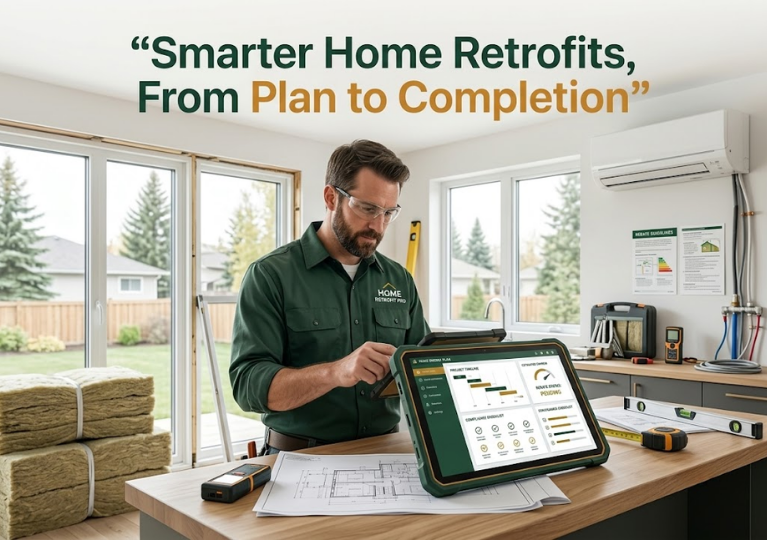

Ready to Unlock Canada’s Retrofit Opportunity?
Turn rebates into revenue. Deliver compliant retrofits with confidence.
